Thursday, October 27, 2011

The Career Of Mantan Moreland -- A Poem


YOU CAN'T WIN (THE NAMES OF MANTAN MORELAND, ACTOR)

You can't win, Nightwatchman
Jefferson
Jeff
Jeff Jefferson
Jefferson "Jeff" Jackson
Jefferson "Jeff" Smith
Elevator boy
Jeff The Hotel Porter
Sam The Night Club Janitor
Shoeshine man
Red cap #2 (uncredited)
Birmingham Brown
Alabam
Barbershop Porter
Bartender
Subway rider
Messenger
Counterman
Waiter
Old man, you're out of luck


--Michael Giltz

Monday, October 24, 2011

Books: Marriage Plots, Baseball Woes, Economist Superheroes And The Opium Wars


Here's a quick roundup of four of the biggest books of the fall and which ones are worth your time.

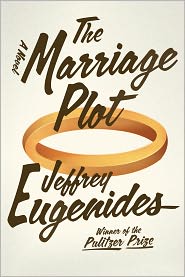
THE MARRIAGE PLOT BY JEFFREY EUGENIDES ** 1/2 out of ****
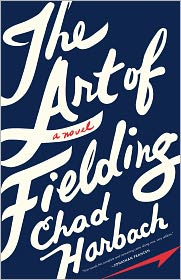
THE ART OF FIELDING BY CHAD HARBACH ***
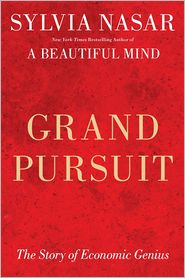
GRAND PURSUIT BY SYLVIA NASAR ***
RIVER OF SMOKE BY AMITAV GHOSH *** 1/2

2011-10-24-1101047182.jpeg

THE MARRIAGE PLOT BY JEFFREY EUGENIDES ($28; Farrar, Straus and Giroux) ** 1/2

Can a "marriage plot" still drive a novel, wondered best-selling author Jeffrey Eugenides? It used to be a staple of fiction but now with women having careers and quickie divorces and pre-nups making marriage a matter of convenience, the choice of whom to marry doesn't have the same weighty impact for a woman that it did in the 1800s. Back then, it was often the single defining decision of their lives (if it was their choice at all). So will a marriage plot work today?

Of course it can, since the search for true love is still fraught with peril and desire. But it helps to have a heroine to root for. In his follow-up to the deservedly Pulitzer Prize-winning book Middlesex, Eugenides focuses on a collegiate love triangle.

Madeleine Hanna is an English major devoted to Jane Austen and George Eliot. Mitchell Grammaticus is the dopey childhood "friend" who has always loved her but never found quite the right moment to act. And Leonard Bankhead is a sexy, driven, compelling but fragile bad boy who is just the sort of damaged, highly medicated soul a woman can make her life's work. Eugenides is strong on Bankhead's mental breakdown and best of all Grammaticus' religious journey to India to find himself, where the novel truly comes to life.

Several problems here: Madeleine simply isn't a winning heroine. Worse, she's torn between two men and we can't help feeling that neither one is right for her (nor she for them). In effect, we're reading a novel in which we are hoping no one gets together. Well, a marriage plot can work, but a "please don't get married just yet" plot isn't quite so compelling.
2011-10-24-1100737228.jpeg

THE ART OF FIELDING BY CHAD HARBACH ($25.99; Little, Brown) ***

One of the most hyped books of the year, Harbach's debut proves a genuine crowd-pleaser and smart commercial bet of the best sort. Comparisons to John Irving make sense since like Irving Harbach is a deceptively straightforward writer with a talent for character and narrative.

The story here is about a college baseball phenom named Henry Skrimshander. (The names in this book are so out there, it must be a sign that writers are running out of names for characters that can be cleared for use; maybe real people should rent out their names and provide a waiver?) Henry is a natural at shortstop and is spotted by Mike Schwartz, who soon recruits Henry to the tiny liberal arts Westish College.

Don't worry if you're not a fan of baseball. Harbach makes the joy of sport -- and specifically the pleasure of refining a skill and getting better and better at it -- universal for anyone. And this is not a novel that climaxes with the big game. (Though of course there is a big game.) It climaxes with a cast of characters and how they bounce off each other.

Henry's roommate is Owen Dunne, a casually out member of the baseball team who finds himself being wooed by the college President Guert Affenlight (!), heretofore happily heterosexual until Owen rocks his world. A widow, Guert is trying to reach out to his estranged daughter, who washes up on his shore after a collapsing marriage. The last thing Pella Affenlight wants is a relationship but the blunt, straightforward, determinedly caveman-like Mike Schwartz simply can't be denied.

A freak accident pushes Henry's ascent to the majors off course and derails everyone around him. Harbach captures the pressure of expectations that weigh down on Henry beautifully, down to the illogical but heartbreakingly believable eating disorder and self-destructive behavior that plagues the kid. Certain plot twists feel just like that -- artificial twists to gin up the excitement -- but Harbach rescues this by having his characters react movingly to them. Plus, he ends the novel on just the right note. So first time at bat he's scored a hit. Great. Now, like any ballplayer, we expect Harbach to do it again.
2011-10-24-1102244830.jpeg

GRAND PURSUIT: THE STORY OF ECONOMIC GENIUS BY SYLVIA NASAR ($35; Simon & Schuster) ***

Despite policy makers and trouble makers (like Marx), I've always blithely considered economists to be people who describe and clarify the actions of the economy, rather than dramatically change it. But Sylvia Nasar's new book opened my eyes to the radical and powerful influence the men and women devoted to economics have had in the world, much of it for good. Her first book was the surprise bestseller A Beautiful Mind, a biography of John Nash that demonstrated Nasar's gift for elucidating complex mathematical ideas.

Here she turns that skill to a fascinating story on a much bigger canvas.  Like the popular histories of David McCullough and other acclaimed authors, Nasar's Grand Pursuit is chock-full of fascinating men and women and their stories, with one drama-filled account tumbling on top of another. She compellingly tells all their achievements as one overarching tale. Charles Dickens and Karl Marx (among others), bring to light the miserable conditions under which so many people lived and say, this needn't be. Beatrice Webb virtually invented the welfare state and proved that ensuring decent education, food and medical care would dramatically boost the private sector. Irving Fisher had the insight that governments that managed their money supply smartly would increase the likelihood of economic stability (a point echoed by Paul Krugman just today in discussing the European Union's debt crisis). And that's just in the first 170 pages.

It's not a dry recitation, either. Webb earnestly ventures into parts of London most proper women would never dream of seeing. Marx indulges in his own welfare state at the expense of Engels. Fisher's bout with tuberculosis (usually a killer in those days) took years to recover from and turned this academic into a crusader. Grand Pursuit is a very entertaining tale bursting with great stories, like the deftly painted scene at 78 Regent Street, the address where the first women to attend Oxford resided in bohemian splendor. Don't think for a moment you need to have a dog in the fight between Keynesians and the Chicago School to enjoy this book. You may not realize how dramatically the lives of so many people have improved in the last 200 years, but Nasar's Grand Pursuit will show you a major reason why and how it happened.
2011-10-24-1100816164.jpeg

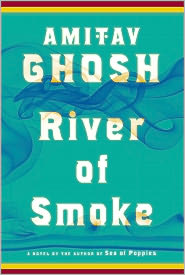
RIVER OF SMOKE BY AMITAV GHOSH ($28; Farrar, Straus and Giroux) *** 1/2

Whatever you do, DON'T read Amitav Ghosh's new novel River Of Smoke. It's the second book in a sprawling trilogy that began with the international bestseller Sea Of Poppies. By all means, dive into Sea Of Poppies and then you can read River Of Smoke. These two books are so artfully written, you will feel a sense of satisfying completion after each one, even though the story is going to be continued and you're eager to find out what happens next.

They're part of the Ibis trilogy, so-called because the books pivot on the journey of the Ibis, a ship that looms large in these tales. It might just as easily have been called the Opium Wars, since it is set in the early 1800s and leads up inexorably to that showdown between China and Great Britain, with India squeezed in the middle.

Where to begin? With the vision that reveals to an illiterate woman in a tiny village that she will embark on a voyage on the Ibis (even though she's never even seen a sailing ship like that before)? With the opium trader Bahram Modi, who has a gift for navigating the tricky politics of Canton and his dual existence at home and with his true love, a woman on a tiny boat who cooks for sailors? With the naturalist who ventures from England to discover if a fabled plant actually exists or is just the fantastical imaginings of an artist who wanted to beguile?

Ghosh is such an artist. Dickensian is the word the invariably springs to mind, because he has an endless supply of vivid characters and enough plot to keep all of them -- and dozens more -- dancing away for years. His talent for dialogue is especially remarkable for Ghosh is writing in English while capturing the distinctive patterns of both speech and the written word in a bygone era by people who might speak Mandarin or some Indian dialect but are using English to communicate with one another. His dialogue is musical, vivid, funny, utterly original and a sheer delight.

Sea Of Poppies was flawless. This second book does not disappoint, but you do see the gears of this massive tale move the story along here and there as Ghosh leaps from continent to continent and character to character. Pirates, romance, despair, love, suicide, fate, the gods, addiction, redemption and history -- it's all here. Can Ghosh bring his marvelous tale to a satisfying conclusion? If River Of Smoke is any indication, the answer is yes, if "satisfying" includes heartbreaking and moving. We may have to wait till 2014 to find out. But it's worth the wait and you've got two books to read and reread until then.

BOOKS I'VE READ -- 2011

Unbroken by Laura Hillenbrand *** 1/2
The Songlines by Bruce Chatwin ****
Two Adolescents by Alberto Moravia *** 1/2
King Solomon's Mines by H. Rider Haggard ** 1/2
Cart & Cwidder by Diana Wynne Jones ** 1/2
A Game Of Thrones by George R.R. Martin ****
A Clash Of Kings by George R.R. Martin ***1/2
Just A Dream by Chris Van Allsburg * 1/2
The Good Book: A Humanist Bible by A.C. Grayling ***
Dodsworth in Rome by Tim Egan ***
Prince Valiant Vol. 1: 1937-1938 by Hal Foster ***
Prince Valiant Vol. 2: 1939-1940 by Hal Foster ***
Prince Valiant Vol. 3: 1941-1942 by Hal Foster *** 1/2
A Storm Of Swords by George R.R. Martin *** 1/2
Queen Of The Falls by Chris Van Allsburg ** 1/2
A Feast For Crows by George R.R. Martin *** 1/2
The Greater Journey: Americans In Paris by David McCullough ***
The Great Night by Chris Adrian ** 1/2
Empire State Of Mind by Zack O'Malley Greenburg
The Little Red Pen by Janet Stevens & Susan Stevens Crummel * 1/2
21: The Story Of Roberto Clemente by Wilfred Santiago ** 1/2
The Siege Of Washington by John Lockwood & Charles Lockwood ***
Malcolm X; A Life Of Reinvention by Manning Marable ****
Dawn, Dusk or Night by Yasmina Reza ** 1/2
Unforgivable by Phillipe Djian **
On Being: A Scientist's Exploration Of The Great Questions Of Existence by Peter Atkins **
Mygale by Thierry Jonquet **
Berlin, 1961: Kennedy, Kruschev And The Most Dangerous Place On Earth by Frederick Kempe *** 1/2
High Strung: Bjorn Borg, John McEnroe and the Untold Story Of Tennis's Fiercest Rivalry by Stephen Tignor ** 1/2
Death At La Fenice by Donna Leon ** 1/2
Death In A Strange Country by Donna Leon ***
My Friend Flicka by Mary O'Hara ***
Drive by James Sallis **
The Magicians by Lev Grossman ***
The Magician King by Lev Grossman ** 1/2
The Buddha In The Attic by Julie Otsuka ****
Fly By Night by Frances Hardinage ***
Thunderhead by Mary O'Hara *** 1/2
The Hypnotist by Lars Kepler ** 1/2
Cocktail Hour Under The Tree Of Forgetfulness by Alexandra Fuller *** 1/2
East Of The West by Miroslav Penkov ***
Sum: Forty Tales From The Afterlives by David Eagleman ***
Green Grass Of Wyoming by Mary O'Hara ***
A Dance With Dragons by George R.R. Martin *** 1/2
Willie & Joe Back Home by Bill Mauldin ***
The Cut By George Pelecanos ** 1/2
Grand Pursuit by Sylvia Nasar ***/
A Matter For Men: War Of the Chtorrs by David Gerrold **
A Rage For Revenge: War Of The Chtorrs by David Gerrold * 1/2
The Shootist by Glendon Swarthout ***
Sea Of Poppies by Amitav Ghosh *** 1/2
River Of Smoke by Amitav Ghosh *** 1/2
When The Emnperor Was Divine by Julie Otsuka *** 1/2
The Sun Also Rises by Eernest Hemingway *** 1/2
Winesburg, Ohio by Sherwood Anderson *** 1/2
Cousins: A Memoir by Athol Fugard **
The Art Of Fielding by Chad Harbach ***
The Rings Of Saturn by W.G. Sebald ****
Siddhartha by Herman Hesse * 1/2
The Marriage Plot by Jeffrey Eugenides ** 1/2
John Henry Days by Colson Whitehead ***
Prince Valiant Vol. 4: 1943-1944 by Hal Foster ***
Civilization: The West and the Rest by Niall Ferguson ** 1/2
Charles Dickens: A Life by Claire Tomalin ***

Thanks for reading. Michael Giltz is the co-host of Showbiz Sandbox, a weekly pop culture podcast that reveals the industry take on entertainment news of the day and features top journalists and opinion makers as guests. It's available free on iTunes. Visit Michael Giltz at his website and his daily blog.  Download his podcast of celebrity interviews and his radio show, also called Popsurfing and also available for free on iTunes. Link to him on Netflix and gain access to thousands of ratings and reviews


NOTE: Michael Giltz is provided with free copies of books to consider for review, including digital and physical galleys as well as final review copies. He typically does not guarantee coverage and invariably receives far more books than he can cover.

Wednesday, October 19, 2011

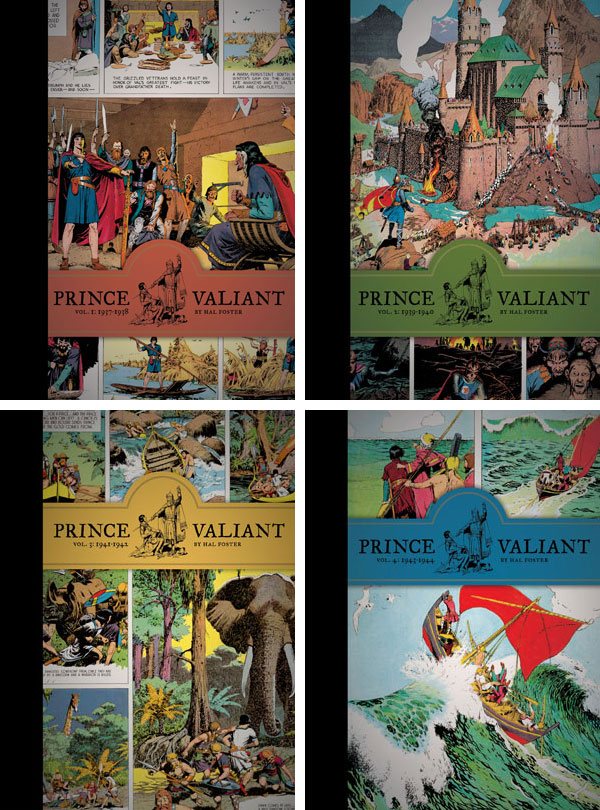
Books: Prince Valiant's Glorious Return


PRINCE VALIANT VOLUME 1 1937-1938
PRINCE VALIANT VOLUME 2 1939-1940
PRINCE VALIANT VOLUME 3 1941-1942
PRINCE VALIANT VOLUME 4 1943-1944

2011-10-19-fce17fe4d2381632cb5cf19349879c65.jpeg

One of the greatest comic strips of all time and a peak in visual splendor and breath-taking adventure, the story of Prince Valiant's 30+ year odyssey is getting a marvelous presentation in Fantagraphics' series of books, which just reached Volume 4 ($29.95 each; Fantagraphics).

You can dive in anywhere, but if you're like me -- someone entirely new to this tale -- it makes sense to begin at the beginning. In Hal Foster's masterpiece, you'll discover the handsome and willful young prince in the days of King Arthur, a winning lad who is brave, strong, clever, conceited, a little brash and boastful but just as quick to apologize for his follies. Valiant will laugh at himself just as often as he laughs at anyone else. What might surprise modern readers is the relative complexity of Valiant, who grows and matures subtly over the years. The strip is violent, sexy, serious, droll and above all eye-catching.

Foster made his bones with a comic strip about Tarzan and clearly learned a thing or two about storytelling from Edgar Rice Burroughs and other antecedents like Ivanhoe. But the great power of a comic strip is the combination of character and story and visual flair. No one before or since has had a more exacting and lively eye for detail and historical accuracy than Foster.

Prince Valiant appeared only on Sundays in full color and Foster's sweeping ambition explodes off the page. The real estate he was given to play with on Sundays contained 12 square panels, but Foster juggled them with aplomb. Each panel is filled with subtle color, sweeping vistas and characters with movement and individuality (no one creates more vivid crowd and battle scenes than Foster). And at dramatically important moments, Foster will expand his vision and have an image take over the space of two or four panels or enlarge one square to center the action marvelously. If Valiant reaches the top of a hill and spots a castle in the distance, that castle will appear with the majesty of a cinematic shot straight from David Lean. If Valiant jumps off a cliff to avoid danger, you catch your breath as he tumbles down, down, down the entire side of the page towards the bottom.

Prince Valiant is great fun from the start, but it really comes into its own in Volume 3. Now in Volume 4, Valiant is determined to seek out Queen Aleta of the Misty Isles, the one woman who has bewitched this red-blooded lad. The series is filled with quests but this is the granddaddy of them all -- it stretches over an 18 month period in all.

Each volume is bookended with some fascinating detail about Foster and the series, whether it's a biographical sketch of the creator, reprints of how some panels deemed too violent or sexy were actually shown to readers at the time (needless to say, the originals are in the volume) and so on. Volume 4 is intriguing because it appeared during WW II when a paper shortage struck the country. Foster knew space was at a premium so he only used two thirds of the page for his strip and imagined editors might want to use the bottom third for some other property. He filled the space with another tale called The Medieval Castle which depicted life in a castle through the eyes of two young princes. It's illuminating to see how deftly Foster fills the strip with details about said life and how a siege actually worked. But Foster needn't have bothered: his tales were so popular almost every newspaper included Foster's entire offering, including The Medieval Castle, which appears here along the bottom of the last 1/4 of the book just as it did in newspapers.

It's intriguing to imagine what Foster might have done with a digital strip, one that could present a battlefield scene on a tablet where the reader could scroll from side to side to capture an entire panorama or maybe scroll down and down even more dramatically than in a newspaper. But these oversized volumes which are 14 inches tall and 10.4 inches wide are far bigger and more dramatic than any tablet. The pleasure of how solidly and carefully they're made is part of the pleasure of reading them. You feel like a little kid as you prop the giant volume up and literally dive into the tale that fills your vision, much as kids and adults did more than 70 years ago. It's a worthy presentation for one of the most important and entertaining works in comic strip history.

Thanks for reading. Michael Giltz is the co-host of Showbiz Sandbox, a weekly pop culture podcast that reveals the industry take on entertainment news of the day and features top journalists and opinion makers as guests. It's available free on iTunes. Visit Michael Giltz at his website and his daily blog.  Download his podcast of celebrity interviews and his radio show, also called Popsurfing and also available for free on iTunes. Link to him on Netflix and gain access to thousands of ratings and reviews


NOTE: Michael Giltz is provided with free copies of books to consider for review, including digital and physical galleys as well as final review copies. He typically does not guarantee coverage and invariably receives far more books than he can cover.

Tuesday, October 18, 2011

1939: The Greatest Year For Movies

Fans of movies have often pegged 1939 as the greatest year in history for the studio system. And no wonder: it's chock full of classic films. Years ago, I decided it 1939 really was the greatest year in film history then I should see as many films from that year as possible. Good, bad, or indifferent, I wanted to know what I would see if I headed to movies week after week during Hollywood's vintage year. Below is a list of every movie I've seen from 1939 that I can track down and remember. Halfway through the project, I decided to write quick summaries of the movies I saw since so many of them were obscure. I'm pretty sure you know what Mr. Smith Goes To Washington and Gone With The Wind are about.


1939 -- HOLLYWOOD'S GREATEST YEAR


Gunga Din ****
The Hound Of The Baskervilles ****
The Hunchback Of Notre Dame ****
The Lady Vanishes ****
Midnight ****
Mr. Smith Goes To Washington ****
Ninotchka ****
Rules of the Game ****
Stagecoach ****
The Wizard Of Oz ****
The Women ****


The Adventures Of Sherlock Holmes *** ½
Love Affair *** ½
Of Mice and Men *** ½
The Roaring Twenties *** ½
Wuthering Heights *** ½

Allegheny Uprising (John Wayne and Claire Tevor) ***
Bachelor Mother (Ginger Rogers w baby and David Niven) ***
Beau Geste ***
Charlie Chan in City In Darkness ***
Clouds Over Europe see Q Planes
Destry Rides Again ***
Dodge City ***
Drums Along The Mohawk ***
Five Came Back (Lucille Ball – plane crash in jungle) ***
Gone With The Wind ***
Goodbye, Mr. Chips ***
Intermezzo: A Love Story ***
Invisible Stripes (Geroge Raft, William Holden, Bogie, ex-cons) ***
The Oklahoma Kid ***
Only Angels Have Wings ***
Q Planes aka Clouds Over Europe ***
The Saint Strikes Back ***
The Stars Look Down ***
The Story Of Vernon and Irene Castle ***
Union Pacific ***
Young Mr. Lincoln ***

The Adventures Of Huckleberry Finn ** 1/2
Calling Dr. Kildare ** ½
Captain Fury ** ½
Charlie Chan at Treasure Island ** ½
In Name Only ** 1/2
The Lone Wolf Spy Hunt ** ½
Night Nurse ** 1/2
The Private Lives of Elizabeth and Essex ** ½
The Real Glory (Gary Cooper, Phillipines, Moro rebellion) ** ½
The Saint in London ** ½
The Secret of Dr. Kildare ** ½
Stanley and Livingstone ** ½

Andy Hardy Gets Spring Fever **
Babes In Arms **
Charlie Chan in Reno **
The Falcon’s Brother **
Made For Each Other **
Maisie (Ann Southern) **
Mr. Moto’s Last Warning **
One Third Of A Nation **
Sylvia Scarlett **

Dancing Co-Ed * 1/2
Espionage Agent * 1/2
Fast and Loose * ½
The Frozen Limits * ½
The Great Man Votes (scenery chewing John Barrymore) * ½
Honolulu * 1/2
The Ice Follies of 1939 (Jimmy Stewart and Joan Crawford) * ½
It’s A Wonderful World (Jimmy Stewart and Claudette Colbert) * ½
Judge Hardy and Son * ½ (Andy Hardy series)
Let Us Live (1939) * 1/2
Mr. Moto In Danger Island * ½
Mr. Moto Takes A Vacation * 1/2
Nancy Drew, Reporter * ½
Society Lawyer (1939) * ½
Stronger Than Desire (1939) * ½
They Made Her A Spy * ½
They Made Me A Criminal * ½

Everything Happens At Night *
Fall In *
Hay Foot *
Here Comes Trouble *
Home On The Prairie (Gene Autry vehicle) *
Jamaica Inn *
Nancy Drew, Trouble Shooter *
Naughty But Nice *
Nick Carter, Master Detective *
Rhythm Romance aka Some Like It Hot *
Tanks A Million *
Topper Takes A Trip *
Way Down South *

Harlem Rides The Range no stars
Charley’s Big-Hearted Aunt (tired farce) no stars
Zenobia (Laurel & Hardy) no stars


87 movies

Updated as of 08/14/2011

ALLEGHENY UPRISING *** -- Surprisingly nuanced film about folk in the colonies before the Revolutionary War who chafe under the tyrannical behavior of a British soldier and the smuggling that threatens their livelihood. John Wayne leads them in semi-legal uprising, always striving to stay in the law while they risk their lives to expose the bad guys and force the British military to meet their demands. Claire Trevor fell hard for Wayne as a kid and desperately wants him to see her as a woman now. British not all bad and colonists not all good; even the Indians are presented in a somewhat complex manner. Smart little movie and quite effective given the “curse” that dooms most movies set around the Revolutionary Era to being awfully dull.

CHARLEY’S BIG-HEARTED AUNT no stars – The umpteenth version of this tired farce is very threadbare with cheap production values, no standout talent in the cast and the feeling that you’re watching some community theater troupe delivering a very bored performance of a play they’ve done one too many times.

DANCING CO-ED * ½ -- When the distaff part of a famous dancing team gets pregnant, the studio decides to turn it into a publicity stunt. They do a nationwide talent hunt at colleges across the country to find the perfect female co-star for the romantic man in his next movie. But why take chances? The studio plants a ringer (Lana Turner) in a small mid-western college. Only the school reporter is convinced it’s a scam, only to have the ringer herself “work” with him to see if they can spot the plant. Nothing special.

EVERYTHING HAPPENS AT NIGHT * -- If you’re wondering how ice skater Sonja Henie became a movie star for a few brief years, this movie will leave you still wondering. As an actress, Henie skates beautifully. Here in her most substantial role, Henie plays the daughter of a Nobel Prize-winning author hiding from publicity and the Nazis. Ray Milland and Robert Cummings are two reporters hot on his trail and both hot for Henie. They vie for her affection while taking way too long to figure out what is really going on and then, of course, trying to protect her and papa from the Nazis. Dull.

THE FROZEN LIMITS * ½ – Would-be British Marx Brothers (with six or so instead of four; I couldn’t be bothered to actually count them all) head to the Yukon Territory to search for gold in a timid tale of crazy old coots, young love and a hidden mine bursting with “ore with an e.” That’s actually one of the more amusing jokes. One oddball bit of whimsy worked: the Canadian Mounties keep singing in unison wherever they go. That was about it.

HARLEM RIDES THE RANGE no stars – In this all black western, Herb Jeffries gives Gene Autry a run for his money as the “dullest singing cowboy” on the big screen. In this case, the production values are even lower and the story so minimal, this film ranks even lower than Autry’s Home on the Prairie. Jeffries is a new foreman of a ranch who suspects foul play in the disappearance of a miner who may have hit a rich vein but has been missing ever since. Lucius Brooks is his sidekick, a fella who never saw work he couldn’t avoid or a word he couldn’t mangle. Brooks seems like a stereotypical “colored” character but in this context he’s just comic relief. Sometimes a goof-off is just a good-off. Spencer Williams – the ground-breaking writer, director and producer – is along for the ride in a minor role and also had a hand in the script, such as it is. Williams of course went on to play Andy in the TV version of “Amos “n’ Andy.”

HOME ON THE PRAIRIE * -- Gene Autry has to be one of the stiffest movie stars around (except when he’s singing). This very typical B movie plays more like a C or D movie. Autry is a cattle inspector. The bad guys have herds infected with hoof and mouth disease and are trying to sneak them to market and blame the problems on Autry. At 59 minutes, it’s very drawn out., thin fare.

HONOLULU * ½ -- Robert Young proves he’s more of a dependable TV presence than a magnetic leading man…even when he plays two leading men. In this movie Young plays a famous movie star looking for a break from his rabid fans. Young ALSO plays a wealthy plantation owner in Honolulu who is a dead ringer for the star. They trade places and complications ensue, if not hilarity. George Burns and Gracie Allen are along for the ride, providing the only sparks of humor in this tired farce.

JUDGE HARDY AND SON * ½ -- A rather tired episode in the Andy Hardy series. But there’s one terrific scene for star Mickey Rooney. Andy Hardy’s mom has fallen seriously ill, with Andy and his sister risking life and limb to get her the medicine/doctor she needs. All they can do is wait. Andy is alone in the hallway and prays tearfully to God to spare his mother. Even back in 1939, scenes of prayer weren’t exactly common in the movies. This scene is so natural and moving and direct, with Rooney given a marvelous close-up that tears your heart out as he cries and pleads his case. It’s a corker.

LET US LIVE * ½ Pretty stiff melodrama. Henry Fonda is a very decent guy who drives a taxi. He gets falsely identified as a killer and sentenced to the chair. His girlfriend/fiace Maureen O’Sullivan desperately works to prove his innocence. The cops are so lazy (even when Fonda is in jail and the same gang pulls another brutal heist, the cops can’t be bothered to even imagine Fonda might be innocent) that it’s no fun. The film’s lone saving grace involves the ending (so stop reading if you don’t want a spoiler). Fonda becomes deeply cynical about the law and justice and is clearly bitter. He remains so after being freed, which is the one touch that seems interesting and fresh. His faith isn’t restored; it’s shattered forever and the movie makes no bones about that.

MR. MOTO’S LAST WARNING ** -- A trim little programmer with Peter Lorre as the famous international policeman. One of three Motos released in 1939 on the eve of war. This one came out on January 20 and had Moto frustrating the plans of saboteurs who hope to blow up ships off the coast of Egypt and sow divisions among the British and French. We’re never told the government these baddies work for. Officials merely gasp when they discover the truth during the last moments of the film. Germany, anyone? (One cut in-joke shows a Charlie Chan film playing at a movie palace but about to close.)

MR. MOTO IN DANGER ISLAND * ½ - A nondescript entry in which Mr. Moto takes on drug smugglers in Puerto Rico. Two points of interest: tragic character actor Warren Hymer (who drank himself out of Hollywood by urinating on Harry Cohn’s desk) as a big palooka and humanitarian Jean Hersholt as one of the many suspects. Opened April 7.

MR. MOTO TAKES A VACATION * ½ -- Opened July 7. Final Mr. Moto with Peter Lorre (just as the Japanese would soon become enemies of the US and a movie series with a Japanese hero untenable) finds Mr. Moto protecting the crown of Sheba and on the trail of a master criminal. Quite routine.

ONE THIRD OF A NATION ** -- Well, here’s a fascinating oddity. It’s based on a play by Arthur Arent that was put on the WPA and every cliché about the WPA’s leftist leanings is on display here. The play shows an Everyman who wants to get some decent housing – he travels through 250 years of housing history in the US, meeting landlords and supers and desperate tenants and all sorts of characters that depict the horrible housing conditions for most of the country’s history. They turned this into a film? Not quite. One Third Of A Nation (unfortunately, I missed the moment when the title was explained) was released in 1939 and sticks mostly to the present. Sylvia Sidney stars as a young woman who lives in a tenement house that catches fire. Her little brother (future director Sidney Lumet!) has a fall from a dilapidated fire escape and gets crippled for life. First the boy is whisked to the hospital by a wealthy man who is horrified to discover he’s the slum lord who owns this tenement. He vows to right this wrong and tries to begin by kicking out a whore, until Sidney’s friend –a leftist – wises him up to the hypocrisy of this. Everyone stands around declaiming their speeches in a stiff manner, with Sidney and the wealthy playboy (Leif Erikson) falling in love without realizing it. But the theatrical origins of the show start to take effect. First the boy Joey (lumet) comes back from the hospital on crutches and goes a little nutty. The rundown building literally starts talking to him and flashes back to the 1800s when the tenement was the site of a cholera epidemic. The building laughs at the boy and tells the kid desperately poor people will always keep moving in. The kid snaps and sets the building on fire. It’s a dullish melodrama, but on the fringes you can spot some fun: the scenes shot on city streets have an authentic feel and it looks like they filmed firemen working to put out a real fire. The defiant whore is never punished, unusual for a post-Code movie and the fires include bodies on fire that leap in despair from the building, screaming in fright. None of that can rescue the movie’s dullness, but it’s intriguing nonetheless, right down to the Soviet kitsch of the finale with smiling profiles superimposed over scenes of new and wholesome buildings where tenants can walk in parks and swim in pools. Maybe the one third of a nation can be okay after all.

Q PLANES *** -- Jaunty doesn’t even begin to describe this interesting British film that’s paced like The Front Page. It’s just a few months before WW II would break out and everyone knew it was coming. The bad guys aren’t identified but are probably Germans. British test planes are disappearing with top secret equipment and espionage agent Ralph Richardson is the only one who realizes it’s not just a series of “accidents.” But this is as much a breezy comedy as it is a spy story. Richardson is eccentric and unflappable and dapper (and reportedly an inspiration for Steed in The Avengers). His sister is a newspaper reporter who keeps scooping him. He also has a girlfriend Richardson continually makes plans with and then cancels. Then there’s Laurence Olivier as a test pilot. Like everyone else, he speaks in rapid fire patter that’s hilariously vivid. If Olivier is exchanging insults with the head of the plane manufacturer, you know it’s the sort of movie where they yell at each other but deep down, by George, they really like each other. Comic, serious, silly, well-acted if not terribly inventive plot-wise. (The bad guys have a secret ray to disable planes that looks like something out of Buck Rogers and is probably more important and useful than anything they could discover in their spying.) Fresh and fun.

THEY MADE ME A CRIMINAL * ½ -- In this dull Warner Bros. drama, John Garfield is a boxing champ forced out of town on a bum murder rap without a penny to his name. He wanders onto the ranch where the Dead End Kids are wisecracking it up while they look to get regenerated (reformed). One of their older sisters is blonde enough to attract Garfield’s attention. Always wary of being a sucker, Garfield finally – sort of – learns to help out others. In truly odd casting, Claude Rains is a tough guy detective who wants to track Garfield down and bring him to justice to regain his good name after frying another guy in the electric chair. Rains is all wrong in the role, especially as he plays the guy. Garfield and the gal never convincingly click and the Dead End Kids just don’t belong on a ranch (and look about 25 to 30 years old to boot). Slim stuff.

WAY DOWN SOUTH * -- Bizarre curio makes Gone With The Wind almost seem subtle. On a plantation, the massah dies and leaves everything (including his beloved darkies) to his young son, Bobby Breen. Breen was a child actor with an angelic sort of voice, sort of a male Deanna Durbin and films were just an excuse to have him chirp out a number or two. In this case, the boy’s crooked executor treats the slaves cruelly, beating them and such when of course the massah never did no such thing. The cruel adult also wants to sell them off, not even keeping families together! The lad must risk everything to prevent such a cruel fate. Surprisingly, the story and script are by Langston Hughes and the pioneering black actor Clarence Muse, who plays Uncle Caton in the film. Full credit to the filmmakers for employing them but demerits to someone somewhere for the absurd tale they delivered. A bizarre high point occurs when Breen despairs of being able to halt the auction of his slaves. They’re all gathered in a barn during a storm, weeping and wailing over their fate. Breen stumbles in from the rain, dressed in rags, gets up on a bale of hay and launches into “Sometimes I Feel Like A Motherless Child.” Yes, singing an old Negro spiritual to his slaves! And it’s actually quite a good arrangement and performance I must say. Breen in general is good, despite the annoyingly wholesome character he plays here. A real oddity.